Tuesday, March 22, 2011

Take The Challenge: Plant a Yard in Your Yard

Now that Spring has arrived, the growing season will be here soon!  At URWA, we've become especially interested in supporting native pollinators in recent years.  In fact, the speaker at our upcoming membership meeting (Monday, March 28th at the Clarence Dillon Public Library in Bedminster at 7:00 p.m.) will feature Dan Cariveau, a Rutgers scientist who is investigating the outcomes of pollinator restorations implemented on private lands in New Jersey.
It makes a great deal of sense to include plants that attract and feed native pollinators in our landscapes at home, on school campuses, in public parks and our places of work.  Native pollinators (bees, butterflies, moths, birds and even bats are included in the long list of native animals that carry pollen and thus help fertilize both ornamental and commercial plants in our state) play a tremendous role in fruit and vegetable production, so they provide benefits to all of us who enjoy fresh New Jersey produce!  In fact,animal pollinators are needed for the reproduction of about 90% of flowering plants and one third of human food crops.

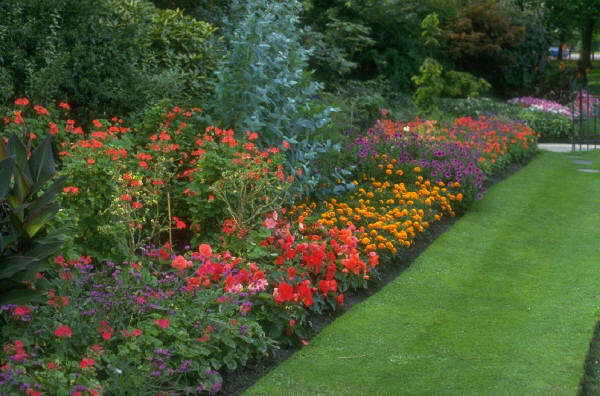
If the concept or planting a garden patch specifically designed to attract and support native pollinators seems daunting, we have an idea for you.  Consider starting small -- how about planting just a yard in your yard?  By that we mean taking a one square yard patch of lawn and converting it to a garden for native pollinators.  Dig up the grass and plant a few varieties of flowers and shrubs that will bloom throughout the spring, summer and early fall months in your new little garden.  You have a lot of choices when it comes to selecting what plants to use -- of course you'll want to make sure they are native to our region.  An excellent resource to consult is Selecting Plants for Native Pollinators:  A Regional Guide for Farmers, Land Managers and Gardeners in the Eastern Broadleaf Forest.  This guide describes many native plants, what they look like, what conditions they need (sun,shade and the like), when they bloom and which pollinators they support.  using it will help you quickly select which plants you want to include in your "yard within your yard". 

Your new pollinator patch will undoubtedly provide you with a great deal of pleasure.  From the colorful flowers on the plants to the fascinating and often beautiful pollinators that visit them, you'll enjoy watching what goes on as the months go by.  In fact, we won't be at all surprised if you get hooked and decide to learn more about gardening with native pollinators in mind, sign up to participate as a citizen scientist in the Great Sunflower Project, and/or devote more yards of your yard to pollinator habitat next year!  

For more information about native pollinators and what you can do to support them, vjoin us on Monday evening at our membership meeting and visit one or more of the web sites we've mentioned already, or one of these below:

The Xerces Society
The Natural Resources Conservation Service

Monday, March 7, 2011

Another Habitat Transformation Project Will Soon be Underway at Fairview Farm

We will soon be removing some of the trees and other wooded plants at Fairview Farm to create a scrub-shrub habitat as part of our Wildlife Habitat Incentives Program (WHIP). Visitors will easily notice our work, as the transformation will occur in an area to the right of the driveway at the entrance to Fairview Farm. This portion of our grounds is currently dominated by eastern red cedar, and it also has a good mix of oaks, beeches, and pines. A scrub-shrub habitat is limited to 30% wooded flora, so many of the trees will be removed. Scrubland habitats are usually the result of a disturbance such as a fire, flood or strong wind. Our disturbance will be in the form of chainsaws and a bush hog.

The red cedars are our primary target for removal because of their abundance in the area (approximately 80% of the trees are eastern red cedar). There are also some invasive plant species present in this vicinity that will be removed to create a purely native habitat. The wooded vegetation will be replaced with a mix of grasses and forbs.

Creating a scrubland is an important project for URWA because this habitat is absent on Fairview Farm; therefore, a new niche will available for our wildlife to use. We might also entice new creatures to make Fairview Farm their home. Scrub-shrub habitats are great for song birds, game birds and many predatory birds. You can also expect deer, rabbits and other animals to use this habitat for grazing or hunting.

The red cedars that we remove will be turned into posts for deer fencing and trellises – we’ll even host a workshop on may 15th where you can make a garden tower for your garden, and we expect to have more than we need for use at Fairview Farm, so please let us know if you’d like to take some home after we’ve finished our project. The invasive plants will be removed and added to our brush pile and we’ll turn all the other wooded materials into wood chips.

Tuesday, March 1, 2011

They're Back! Woodcocks are Singing at Fairview Farm

Photo:  U.S. Fish and Wildlife Service
The American Woodcock is a forest-dwelling shorebird that lives in much of the eastern United States.  It migrates to warmer climates for the winter and typically begins arriving back in our region as the temperatures start to rise in late February or early March.  The mixed habitats of forest and meadow at URWA's Fairview Farm Wildlife Preserve attract a significant number of American Woodcocks each year, and in just the last week we've seen and heard them as we leave our office at the end of each work day.

This bird has a fascinating courting ritual that takes place on warm mornings and evenings in the late winter each year. The male woodcock begins his “peenting call” at sunup and sundown. To attract a female, he first struts in circles on the ground and then takes flight, circling and whistling 100 feet high. The whistling turns into a high pitched twittering, ceasing suddenly as the lovesick bird flutters to the ground, only to begin the dance again. The woodcock is so caught up in his romantic ritual that the observer can get close to this otherwise evasive bird!

The sights and sounds of the woodcocks are truely enchanting, and we'll host a special "Woodcock Watch" program at Fairview Farm this weekend to help bird enthusiasts become more familiar with them.  On Sunday, March 6th, we invite you to join us from 5:30 p.m. to 6:30 p.m. at Fairview Farm (2121 Larger Cross Road in Bedminster) for a chance to see and hear them.  There is no cost to attend this program, but we ask that you call (908) 234-1852, ext. 16 to register.

Of course, we can’t guarantee a sighting, but the sunset at Fairview Farm alone is worth the visit and if the “Singing Field” is quiet you can listen to the sounds of the evening! Sunset will occur at 5:51 p.m. so everyone should plan to arrive no later than 5:30 to park your vehicle and walk to one of the fields while there is still light in the evening sky.

For more information, please contact Susan Brookman at 908-234-1852, ext. 20 or email sbrookman@urwa.org.


Thursday, February 17, 2011

Think Summer! Nature Day Camp Registration is Underway


During a session of URWA's 2010 summer
day camp, Jake Ballard of Bernardsville,
Gretchen Almendinger of Hillsborough and
Ayaan Kahn of Bridgewater take a break from
their stream studies to smile for the camera.

URWA hosts a variety of summer day camp programs at our Fairview Farm headquarters on Larger Cross Road in Bedminster and at the privately owned Pleasant Valley Mills Farm in Mendham. Registration for the 2011 summer season is now underway!

Formerly the site of a dairy operation, Fairview Farm’s 170 acres of fields and forests have been managed as a wildlife preserve since the land was bequeathed to URWA in 1973 by the estate of Mrs. Roberta Zuhlke. Children ranging in age from 3 to 10 enjoy unique outdoor learning experiences there. With nature as their informal classroom, the youngsters spend many fun-filled hours investigating the terrestrial and aquatic habitats that make up the preserve. The day camp leaders who guide the programs and the high school students who assist them help each child develop a genuine appreciation for the out-of-doors and learn how to protect our natural environment.

Alison Gause of Chester gathers eggs
at Pleasant Valley Mills Farm.
Pleasant Valley Mills Farm lies along the banks of the North Branch of the Raritan River. It includes the site of an historic grist mill, meadows, wooded slopes and a barn along Roxiticus Road where families have stopped for years to enjoy the rare sight of a sow and her piglets. Each day begins and ends with farm chores for the children who participate in URWA’s camp there as they learn how to care for chickens, sheep, ponies and a friendly donkey. The day campers also swim in the North Branch, collect water samples as they investigate water quality in the river, plant an organic garden and enjoy visits from craftsmen such as a ferrier, bee keeper, sheep herder, fly fisherman, chicken expert and herbalist.

For information about the day camp sessions that will be offered this summer, please visit our web site at http://urwa.org/education/naturecamp.html. Alternatively, you may request that a nature day camp flier and registration form be mailed to you by calling us at (908) 234-1852, ext. 12.

Monday, February 7, 2011

Hoot!

Winter, especially this particularly snowy winter of 2011, tends to shut people indoors. We wait for the temperatures to rise, the snow to melt, and for the earth to come back to life with the greening of spring. However, winter is the best time of year to observe certain New Jersey wildlife, most notably owls!

Empty canopies, stark white backgrounds and nights glowing with the moon’s reflection off the snow are ideal for owl spotting. New Jersey plays host to eight species of owls, some of which are only found here in the winter. The most elusive of the group include the Snowy Owl (Nyctea scaniaca), Saw Whet Owl (Aegolius acadicus), Barn Owl (Tyto alba), Long- and Short-Eared Owls (Asio otus and Asio flammeus). These owls are less commonly found for multiple reasons, including their choice of habitats inconvenient to finicky humans, and their erratic travel schedules (some appear in New Jersey only every few years, when their prey populations up north become more scarce). More commonly found owls include the Great Horned Owl (Bubo virginianus) and Barred Owl (Strix varia), and the owl most common to New Jersey is the Eastern Screech Owl (Otus asio).

The Eastern Screech Owl is a year-round resident of New Jersey. It is relatively small, about 7 to 10 inches tall and with a wing span of 18 to 24 inches. This owl has two color phases or “morphs,” meaning it can be gray or red.

A screech owl’s call sound more like a whinnying horse than a screech, as its name implies. You can hear them from dusk to dawn in New Jersey’s woodlands, parks, suburban areas, in wetlands and near fields. They are opportunistic hunters, aiding in their ability to adapt to many habitats. They are able to grab large flying insects right out of the air, but seem to favor small rodents such as deer mice and moles. Other prey include small fish, snakes, frogs and spiders.

Screech owls breed from March through May, and have elaborate courting rituals, including unique calls, dancing, and even wink at each other! Once a partner is found, they will mate for life. Nesting is done in tree cavities, anywhere from 7 to 50 feet off the ground. They do not build a nest, but use natural sawdust at the bottom of the cavity for cushioning of their eggs, which are incubated almost exclusively by the female while the male hunts for food.

Next time you find yourself wishing for spring, try to remember the interesting winter life of New Jersey’s owls. Make some hot chocolate and go for a night hike along the stream in your backyard, or in your neighborhood park, especially in the first few hours of darkness. Open your ears and listen for the whinnying call of a Screech Owl - you may find the quietude of winter is actually full of life, once you take a closer look!

Resources:
http://www.njskylands.com/ecobirds_owls.htm
http://www.owlpages.com/owls.php?genus=Megascops&species=asio
Owl Facts: Focusing on NJ’s Owls published by The Raptor Trust

Wednesday, January 19, 2011

Hooray for the New Fertilizer Bill

Our state has kicked off 2011 on a high note by passing the nation’s most far-ranging bill to regulate the content and use of lawn fertilizers. Fertilizers are packed full of nutrients, in particular phosphorus and nitrogen, which are a primary cause of pollution for our state’s rivers, lakes and bays.


Who doesn’t want a green lawn? We all do, but overuse and misuse of fertilizers cause way more harm than good, and this bill will go a long way towards improving water quality and restoring balance to our state’s delicate aquatic ecosystems.

Signed into law in the first week of this year, the bill bans phosphorus from lawn fertilizers while requiring that 20 percent of the nitrogen in them be slow release, so that more of the fertilizer stays on your lawn and out of local streams. Excess nitrogen and phosphorus, washed into streams through stormwater, produce algal blooms that reduce oxygen levels in water, threatening fish and other aquatic life. Throughout our nation, fertilizer runoff is causing dead zones - in the Gulf of Mexico, Chesapeake Bay, Peugeot Sound, Great Lakes and in New Jersey’s Barnegat Bay, there are areas where oxygen starved waters are virtually void of fish and other aquatic wildlife.

Application of fertilizers is also limited and regulated in the new bill, with homeowners banned from applying fertilizer before March 1st or after November 15th or at any time the ground is frozen. Professional lawn-care companies must now be trained and certified by the State if they want to apply fertilizer. Fertilizer cannot be applied, except under certain circumstances within 25 feet of a water body and never before or during a heavy rainfall.

While state retailers can continue to sell the existing fertilizer for the next two years, homeowners can start protecting New Jersey’s ecosystem right now by self-regulating their fertilizer use: Do bother to read the labels, don’t over-use fertilizer, and don’t apply it on frozen ground or near waterways.

Right here in the Upper Raritan Watershed region, stormwater runoff is our greatest threat to water quality. When URWA’s Staff and Volunteer Monitors come across a degraded waterway, it is typically caused by animal wastes, a failed septic system or overuse of fertilizer. We, as citizens of the watershed can each make a difference. Keep livestock and manure compost out of the stream buffer, clean up after your pet, maintain your septic system and please don’t abuse the use of fertilizers in your own yard. New Jersey’s new fertilizer bill presents a wonderful opportunity to protect our state’s most precious resource - WATER.

Thursday, January 6, 2011

Road Salt: Helpful and Harmful

Are you disturbed by the whitish-gray coating on shrubs along our roadsides each winter? Does it bother you to come across heaps of road salt hovering over a stream bank?  Snow is in the forecast for later this week, so now is a good time to give some thoughtful consideration to how we clear it from roadways and sidewalks in order to allow everyone to move about safely after a winter storm.

Road salt, which is composed primarily of sodium chloride, degrades vegetation, aquatic ecosystems and water quality. There is no single solution to reducing road salt contamination of local waterways and groundwater. It will require a combination of approaches including:
  • more efficient application of road salts using computerized trucks, driver training, and accurate weather information to more accurately time road salt applications
  • better storage practices utilizing sheltered storage facilities with stormwater treatment and control
  • management practices to reduce losses during transfers
  • management of equipment washwater to minimize releases
  • locating “snow dumps” away from rivers and groundwater recharge areas, and collecting and treating snow dump runoff
  • use of environmentally friendly road salt alternatives, such as calcium magnesium acetate, in sensitive areas
  • education of homeowners and business owners about the environmental impacts of road salt
  • policy changes such as moving away from bare pavement policies for secondary roads
  • lower speed limits on roadways immediately following snow storms
  • renewed emphasis on plowing
Some communities within our watershed have taken significant steps to reduce the amount of road salt they use to clear roads.  Chester Township stands out as one example:  the community's Department of Public Works uses a pre-wetted rock salt application process, using beet juice to keep the salt from blowing and bouncing off roadways after it has been applied.  The salt stays on the road longer and therefore allows the community to use less of it, saving money and reducing the negative environmental impact of traditional road salt application methods.  Other communities in New Jersey have begun exploring ways to lessen the amount of salt they apply to roads, and we encourage everyone to support these efforts.  Find out what products and methods your local government uses to keep the roads clear and let us know if we can help you as you ask them to consider approaches that will prove to be less damaging to our environment.

When it comes to clearing your own driveway and sidewalk, the old-fashioned shoveling method is the most benign way to move snow from your pathways.  If you feel you must use rock salt, please apply it sparingly -- a little bit goes a long way -- and be sure it does not run off into nearby wetlands or streams!